
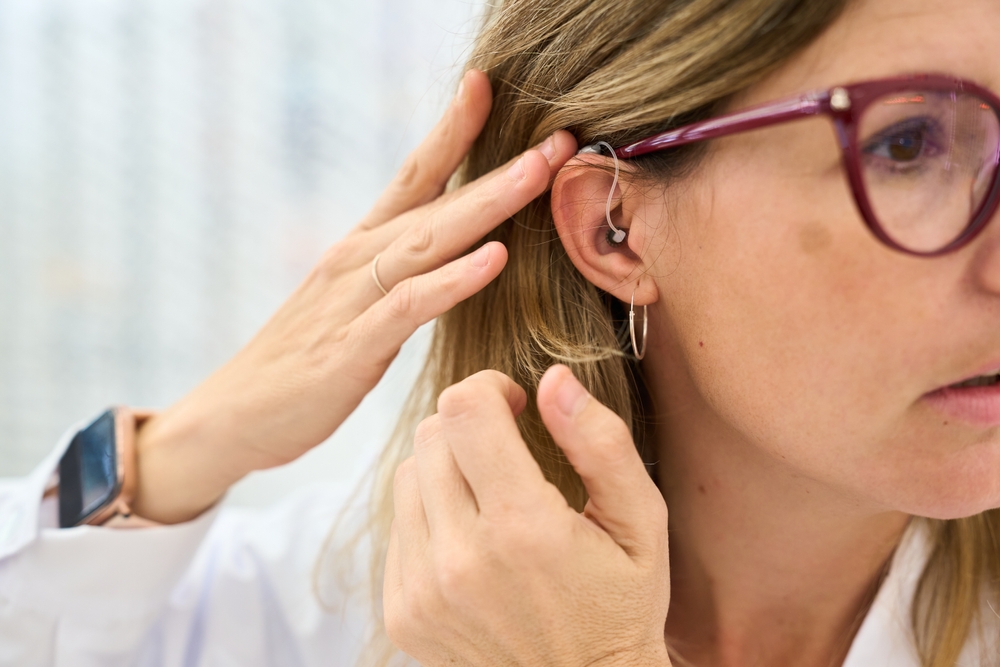
A significant number of patients postpone treating their hearing loss because they harbor concerns regarding device aesthetics and physical comfort. For years, hearing aids were large, noticeable, and often negatively associated with getting old. Regrettably, some people even experienced social alienation because acquaintances falsely assumed that wearing a visible aid signaled a complete inability to comprehend spoken dialogue.
Consequently, this outdated, negative stereotype persists, preventing numerous individuals from seeking professional care. In reality, the sophisticated hearing instruments of the present era deliver a look and feel that shatters these old assumptions. Revolutionary breakthroughs in micro-component miniaturization and ergonomic design have rendered these devices incredibly compact, ultra-lightweight, and virtually unnoticeable.
If you have spent years avoiding an audiologist due to the appearance of old devices, now is the perfect moment to explore today’s sleek alternatives!
The Hearing Aid You’re Picturing Doesn’t Really Exist Anymore
If you close your eyes and picture a hearing aid, you might imagine something large, hooked over the ear, and visible from across the room. If that is the visual you hold, you are fundamentally remembering outdated medical equipment from decades past.
Since that era, the manufacturing landscape for hearing solutions has completely transformed. Unprecedented breakthroughs in microchip architecture, material sciences, and digital signal processing have utterly revolutionized modern aesthetics. The resulting devices are beautifully downsized, highly aerodynamic, and built to match lifestyle needs by remaining completely hidden.
Numerous modern instruments are inserted completely within the ear canal structure, rendering them undetectable throughout standard daily dialogue. Alternative styles occupy a tiny footprint behind the pinna, utilizing ultra-light materials and customizable color palettes to match hair or skin tones perfectly.
Navigating Modern Hearing Technology: The Three Core Styles Evaluated
For those investigating what these advanced acoustic tools look like in real life, consider this straightforward guide:
Invisible-in-Canal (IIC) Technology
These are as discreet as it gets. The IIC style fits exclusively within the deep internal canal and is built using a custom impression of the patient’s ear passagographic anatomy. During typical face-to-face communication, these custom models remain completely obscured from view. They remain an exceptionally sought-after solution for patients with mild-to-moderate deficits who refuse to compromise on cosmetic privacy.
The Versatile Receiver-in-Canal (RIC) / Receiver-in-the-Ear (RITE) Style
This architecture stands as the most frequently prescribed configuration in modern clinical practice. A tiny component sits behind the ear, connected by a nearly invisible wire to a small speaker in the ear canal. To a casual observer, their clean lines often mimic high-end commercial wireless earbuds. Surrounding individuals will remain completely unaware of the technology unless they actively look for it.
Traditional Behind-the-Ear (BTE) Reimagined
This style positions the main component body post-auricularly, offering a slightly larger footprint that remains beautifully sculpted and sleek. They are typically prescribed to resolve advanced levels of hearing impairment, generating exceptional sound amplification without the cumbersome weight users traditionally dread.
Ultimately, contemporary hearing aids are built to empower your daily routine rather than broadcast a medical condition to the world.
How Current Hearing Technology Outperforms Traditional Amplifiers
The evolution of these medical devices encompasses much more than a superficial face-lift. Today, they function more like smart devices than traditional medical equipment. A vast majority feature native Bluetooth connectivity, enabling seamless, wireless streaming of telephonic communication, media, and television audio directly into your auditory pathway.
Equipped with dedicated smartphone applications, they allow users to manipulate volume matrices or toggle environmental programs without making manual physical adjustments. For instance, when entering a highly reverberant dining space, you can suppress ambient acoustic noise and sharpen speech clarity in mere moments. Rechargeable batteries have also replaced the tiny ones people used to struggle with. Just place them on a charger overnight, like your phone.
Overcoming the Psychological Barriers to Better Hearing
Even with this encouraging information, taking the initial step toward treatment can induce anxiety. Exploring hearing aid options can be challenging on a mental and emotional level because it’s an admission that our hearing isn’t what it used to be. This mental hurdle can make an individual feel exposed, creating a false impression of losing authority over personal wellness.
But here’s a different way to look at it: Hearing aids aren’t a sign that something has gone wrong. They’re simply a sign of change, which happens to us all. Adopting this tech is definitive proof that you are actively taking charge of your health to empower and protect your daily cognitive function.
Visualize the freedom of utilizing a completely covert acoustic system that restores your ability to track jokes, engage in crowded restaurants, and capture every nuance of the activities you love. Talk about empowering!
Experience Contemporary Hearing Technology Firsthand
The quickest way to erase your grandfather’s mental model is to physically interact with twenty-first-century hearing tech. We encourage you to drop by our office, address your concerns, and hold these miniature devices yourself with zero sales pressure. Think of your visit as an educational open-house to experience the lightweight engineering of modern hearing instruments firsthand.
Almost every visitor walks out completely shocked by how weightless, ergonomic, and cosmetically invisible these tools are in practice! Do not let outdated myths delay your wellness—call our specialized practice or book your appointment online today.