
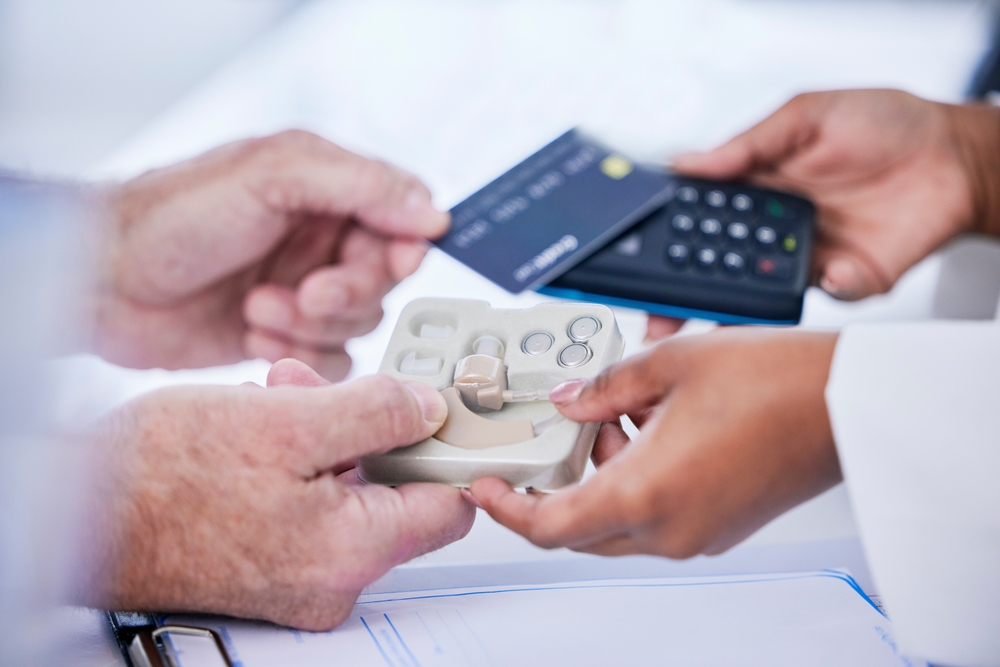
When exploring treatment options for age-related hearing loss or presbycusis, the initial clinical cost of amplification devices can be striking. Depending on the technology and level of care involved, modern hearing aids can range from a few hundred dollars to several thousand. For many patients, this sudden realization can cause hesitation and create an artificial barrier to necessary intervention.
Although the retail price is substantial, alternative funding mechanisms change the clinical landscape. It is a common misconception that the full list price must be borne entirely by the consumer. Between insurance, pre-tax accounts, and financing options, there are multiple ways to reduce or spread out the cost.
We provide this breakdown of available funding avenues to empower your decision-making before your consultation, optimizing your path to enhanced sound localization.
Maximizing Private and Employer Insurance Benefits for Acoustic Devices
Prior to resigning yourself to full private payment, a rigorous audit of your healthcare policy is required.
For individuals holding commercial or corporate group health policies, benefit structures for otologic devices are highly inconsistent. Selected guidelines cover a predefined percentage of the hardware, while others issue a flat-rate allowance. Regrettably, specific commercial contracts provide no financial remedy for hearing preservation. To clarify your position, review your summary of benefits or contact the carrier regarding otolaryngological provisions. Be sure to also ask about coverage limits, whether fittings are included, and which providers are in-network.
It is a critical policy rule that standard Medicare Part A and Part B provide no financial support for hearing hardware. Conversely, privately administered Medicare Advantage options frequently offer hearing-specific stipends as a core incentive.
For low-income individuals on Medicaid, regional state guidelines dictate the scope of available hearing care. Multiple state plans include provisions for adult hearing care, so consulting your local administrative specialist is highly recommended.
Tax-Advantaged Financing: Utilizing HSA and FSA Funds for Hearing Care
If you have a Health Savings Account (HSA) or Flexible Spending Account (FSA), you already have a powerful tool to help pay for hearing aids.
The federal government recognizes therapeutic hearing systems as allowable medical expenses, facilitating tax-free acquisition. Utilizing this financial pathway yields substantial savings that alter the economic equation. For example, if you’re in a 22% tax bracket, a $2,000 purchase effectively costs closer to $1,560. It is vital to distinguish between persistent HSA balances and time-delimited FSA funds that vanish at year-end. Consequently, tactical deployment of seasonal FSA allocations prior to their structural expiration is highly recommended! Both custom-programmed medical devices and eligible over-the-counter options are valid selections, making a baseline balance check highly prudent.
Hearing Aid Financing: Spreading Out the Cost Over Time
To avoid a single large capital outflow, medical practices frequently offer specialized patient installment plans. These plans (usually offered through providers like CareCredit) can include low or no interest for a set period. This arrangement protects the patient from selecting sub-optimal technology merely to meet an immediate budget limit.
Financing is a normal part of the conversation. If you’re concerned about cost, mention it during your doctor’s visit. Remember, there’s a reason all these options exist! No individual should be forced to endure financial instability or compromise their systemic well-being to treat an auditory deficit.
Navigating Veterans Administration (VA) Otology and Hearing Aid Benefits
With hearing deficits ranking as a primary consequence of military service, the VA delivers comprehensive support mechanisms for veterans.
Those with verified eligibility can obtain top-tier otologic hardware with no out-of-pocket exposure via the VA health network. Even in the absence of an official service-connected disability rating for hearing, overall VA priority grouping may grant access. If your military health benefits remain unutilized, coordinating with a local veteran service officer can streamline the application process.
Civic and Non-Governmental Resources for Affording Hearing Technology
Nonprofit and community-based programs can help make hearing aids more affordable. Renowned non-profits like the Starkey Hearing Foundation and civic clubs like the Lions Club routinely sponsor individuals requiring acoustic aid. Furthermore, a number of municipal and state agencies sponsor dedicated initiatives for economically disadvantaged adults.
While these philanthropic avenues often mandate strict income verification and involve operational backlogs, they remain excellent resources. You can check online with most of these organizations to see if you qualify, or at least get the conversation started.
OTC Hearing Hardware: A Technical Assessment of Lower-Cost Auditory Options
Over-the-counter (OTC) hearing products represent an entry-level financial tier, generally priced between $200 and $1,000 for a dual-device configuration. Such devices are clinically appropriate for mild or early-stage moderate presbycusis in self-directed adult users.
However, without a professional fitting, many people don’t get the results they’re hoping for. In cases of advanced sensory impairment, prescription hardware calibrated to a precise audiogram is mandatory for successful rehabilitation.
Before selecting an unprescribed consumer device to save capital, obtaining a clinical hearing assessment ensures diagnostic accuracy. Retail devices function adequately as a temporary placeholder while awaiting insurance pre-authorization or institutional grant approvals. They deliver a satisfactory temporary compromise, but remain structurally inferior to custom clinical systems over an extended timeline.
A Collaborative Approach to Affordable Hearing Care and Device Selection
We help our patients navigate hearing aid costs every day. The clinical landscape contains significantly more financial assistance routes than general consumer awareness suggests.
By providing your current insurance documentation at check-in, our specialists can cross-reference your network benefits and construct a tailored payment solution. Contact our scheduling desk today or utilize our digital portal to book your comprehensive diagnostic audiology appointment. We look forward to delivering the accurate answers and balanced payment options necessary to restore your connection to the world.