
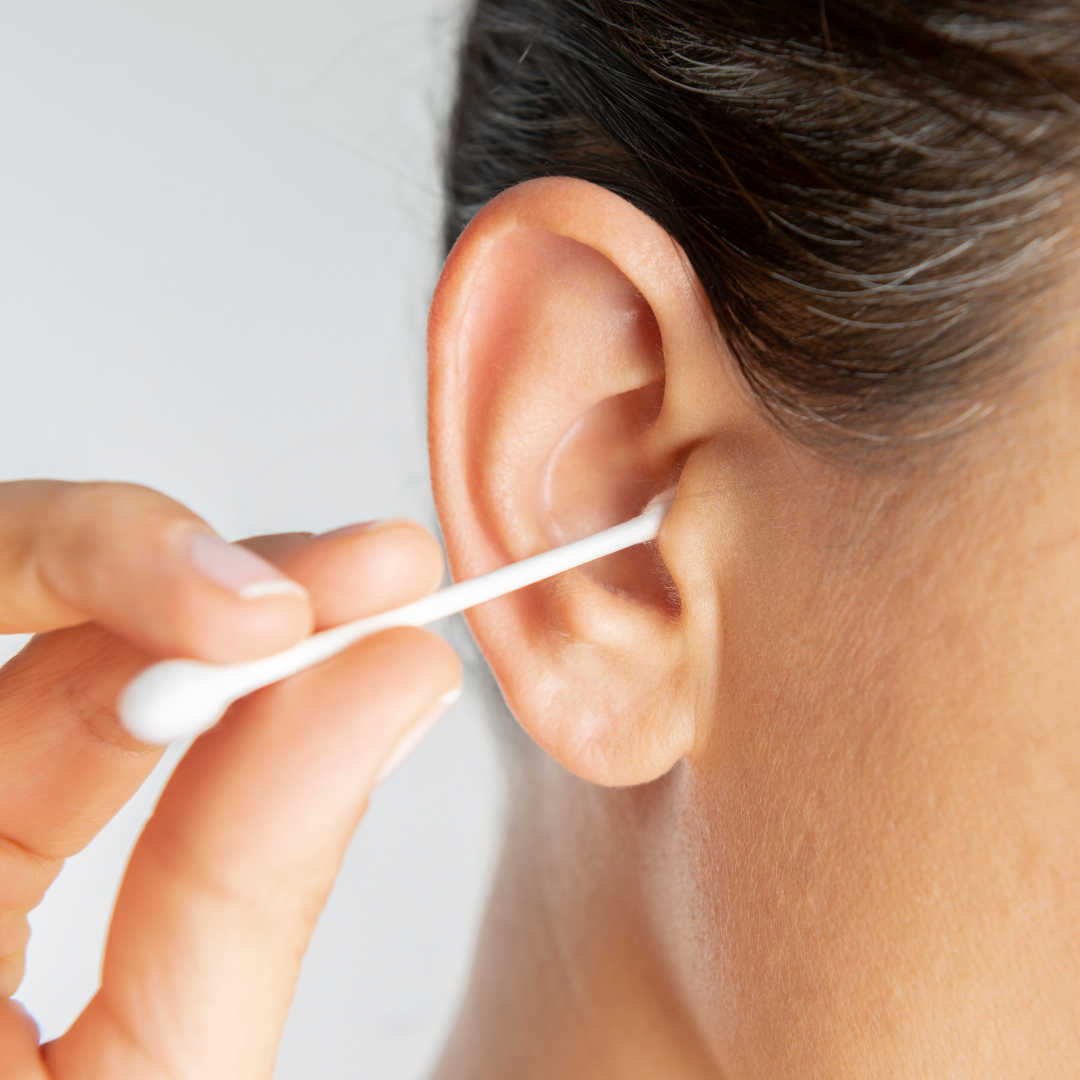
Although cotton swabs feel like accessible ear-care tools, introducing them into the canal hinders self-cleaning mechanisms and may harm your hearing. We can determine whether earwax actually needs removal and recommend a method suited to your ear health. Ear canals typically maintain themselves without assistance; nonetheless, if stubborn buildup develops, we help individuals safely eliminate excess wax.
What Makes Q-Tips Harmful to Ear Health?
In audiology, earwax (cerumen) is recognized as a vital protective substance rather than dirt. Cerumen collects particulate matter, inhibits microbial proliferation, moisturizes the epithelial lining, and shields sensitive canal tissues. Normal jaw articulation and progressive skin turnover transport old cerumen toward the external ear opening, where it naturally detaches.
Inserting a cotton swab directly into the auditory canal interferes with this natural clearance mechanism. Although the cotton may collect a small amount of wax, it often pushes the remaining material closer to the eardrum. Frequent swab use consolidates soft wax into a rigid barrier, generating an uncomfortable plugged sensation that fosters continuous overcleaning.
While cotton swabs are acceptable for cleansing the external folds of the pinna, they must never pass into the ear canal.
Clinical Complications Associated with Q-Tip Insertion
The epidermal tissue coating the ear canal is thin and tears under minimal friction. Microscopic tears cause acute discomfort or hemorrhage while exposing tissue to bacteria, which heightens the probability of an outer ear infection. Furthermore, the cotton fibers may separate from the stick, leaving a foreign body lodged within the canal.
Documented injuries associated with cotton swabs include:
- Cerumen forced into dense canal impaction
- Epithelial lacerations, inflammation, erythema, or bleeding
- Bacterial or fungal ear canal infection
- Foreign body retention including detached cotton fibers
- A torn or perforated eardrum
- Ossicular chain disruption or damage behind the tympanic membrane
- Acute hearing loss of a temporary or permanent nature
- Persistent tinnitus, balance instability, or severe otalgia
Although catastrophic damage remains relatively rare, unexpected arm bumps, hand slips, or excessive insertion depth easily cause acute harm.
Recommended Schedules and Timelines for Cerumen Removal
Most individuals do not need to perform earwax maintenance on a calendar schedule. Normal anatomical mechanisms steadily push cerumen toward the exterior, where regular washing rinses the visible concha. Frequent overcleaning creates dry, irritated canal surfaces while amplifying the risk of severe impaction or microbial invasion.
Professional removal is necessary when wax obstructs the canal, obscures our view of the tympanic membrane, hinders a hearing aid, or creates physical symptoms.
Safe Protocols for Managing Cerumen at Home
If earwax produces no discomfort or auditory decline, leaving it undisturbed is consistently the safest choice. Wipe only the outer ear with a soft, damp cloth, and let the canal clean itself.
When dense wax needs to be softened, we may suggest specialized OTC drops or solutions containing carbamide peroxide, saline, glycerin, or mineral oil. Apply only the specified dosage and never exceed the designated application duration outlined on the label. Stop treatment promptly if the drops elicit sharp pain, noticeable dizziness, allergic rash, or worsening hearing complaints.
Performing home ear irrigation carries distinct risks and requires prior professional evaluation and hands-on technique instructions. Never use a dental water jet. Do not use dangerous devices like ear candles, metal scrapers, endoscopic camera tools, hairpins, or unverified suction units. These dangerous tools carry severe risks of burning skin, lacerating canal tissue, puncturing the tympanic membrane, or packing wax inward.
Indications for Scheduling a Professional Ear Cleaning
Schedule a professional visit if the canal remains occluded after softening treatments, cerumen appears deeply lodged, or home remedies fail. Expert removal is the safest path for patients who struggle to hold still, individuals with narrow ear canals, hearing aid wearers, or those with surgical contraindications to irrigation.
Schedule an ear exam promptly if you experience:
- Unresolved ear discomfort, persistent canal itching, or touch sensitivity
- Hemorrhagic discharge, purulent fluid, clear otorrhea, or foul-smelling drainage
- Elevated body temperature or edema surrounding the ear structures
- Newly developing ringing in the ears or balance disturbances
- Sudden hearing drops or auditory deficits that remain after wax removal
- A possible eardrum perforation or cotton fragment trapped inside
- Chronic cerumen impactions that clog or disrupt hearing aids
Sudden drops in hearing in a single ear require emergency medical attention rather than casual attribution to earwax. Early hearing testing easily separates a physical wax impaction from a critical inner ear condition.
How Can a Doctor Remove Excess Earwax?
The clinical process starts with high-magnification otoscopy or microscopy to establish cerumen presence and screen for infections, abrasions, or tympanic perforations. The most appropriate removal approach is determined by wax texture, canal structure, patient background, surgical history, and individual tolerance.
Professional options include:
- Therapeutic cerumenolytic solutions instilled before or during treatment
- Safe low-pressure irrigation using body-temperature solutions on intact tympanic membranes
- Low-pressure manual suction under direct high-magnification lighting
- Manual removal with a loop, curette, or small forceps
Direct illumination and magnification enable the provider to spare sensitive canal skin and stop promptly upon patient feedback. Utilizing more than one removal technique may be necessary to resolve dry or severely compacted wax. Upon completing removal, the clinician performs a final inspection to confirm optimal canal and eardrum health. If aural fullness, ear ringing, dizziness, or auditory impairment remains after cleaning, further diagnostic evaluations can identify the root issue.
Arrange Safe In-Office Earwax Removal
Should your ears feel congested or your hearing performance decline, arrange an evaluation with our audiology clinic instead of reaching for swabs. Your scheduled visit includes reviewing active symptoms, past ear procedures, hearing aid status, home management methods, and individual risk factors for cerumen impaction. Contact us now to schedule an appointment for comprehensive, expert earwax removal.